

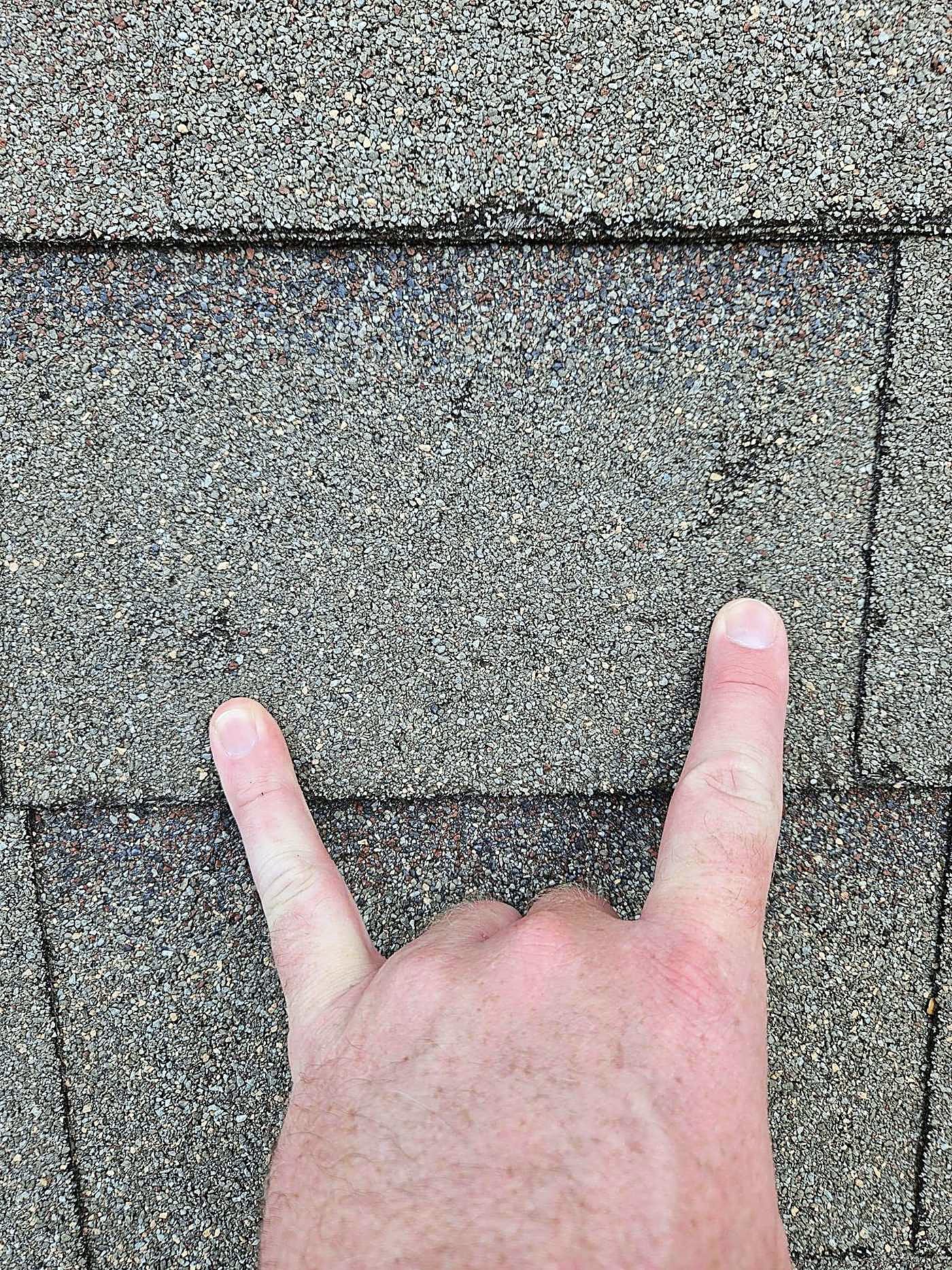
What does an insurance adjuster look for after hail?
A test square, usually ten feet by ten feet, marked out on each slope, and a count of how many hail impacts fall inside it. Most carriers want a threshold number of hits in that square before they will call the slope damaged. That is why a roof can look hit to you and read as undamaged on a report.
The test square is the whole method
An adjuster chalks a square on a slope and counts impacts inside it. The threshold varies by carrier and by region, and the number of slopes that meet it decides whether you get a full roof, a partial, or a repair. Understanding that turns the visit from a mystery into a procedure.
It also explains the outcome people find hardest to accept: that a south slope can be paid and a north slope refused on the same roof, on the same day, from the same storm. Hail falls with a direction and slopes take it differently.
Soft metal is the evidence that settles arguments
Shingle bruising is arguable. A dent in a gutter, a downspout, a vent cap or a piece of flashing is not, because those metals take a clean impression and hold it. Adjusters look at them first for exactly that reason, and so should anybody walking the roof before the adjuster arrives.
If your roof has damage and your soft metal is clean, expect a harder conversation. If your soft metal is dimpled, the date and the direction of the storm are much easier to establish.
What to have ready before they arrive
The date of the storm, photographs taken as close to it as possible, any previous roof paperwork, and somebody who has already been on the roof and can walk it with them. That last one matters more than it sounds: two people looking at the same slope together produce a shorter argument than two reports written a week apart.
Have the attic accessible as well. Decking that has been wet shows it from underneath, and that is often the difference between a partial and a full replacement.
Related questions
Can I be there when the adjuster comes?
Yes, and you should be. So should whoever inspected the roof for you.
What if the adjuster only pays for one slope?
That happens, and it is the most common point at which a claim needs re-arguing. Ask why, get the test-square results, and consider whether the other slopes were measured at all.
Does a cosmetic damage exclusion apply to hail?
Some Texas policies carry one for metal roofs. Read your declarations page, or ask your agent to point at the endorsement.